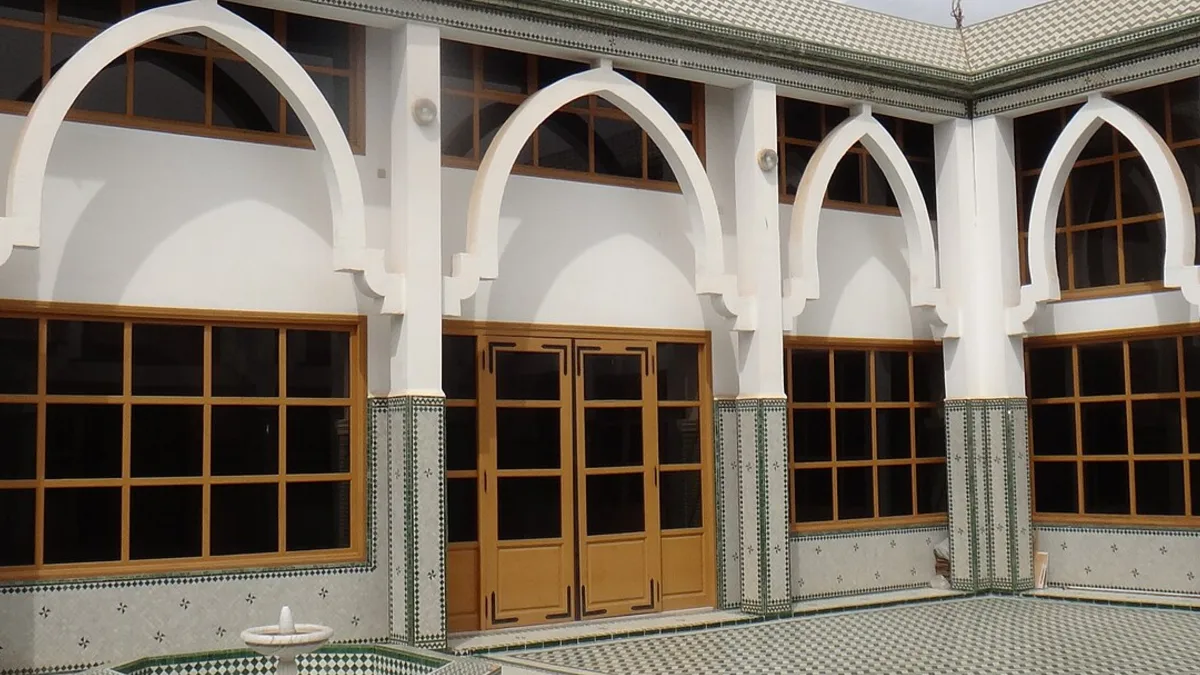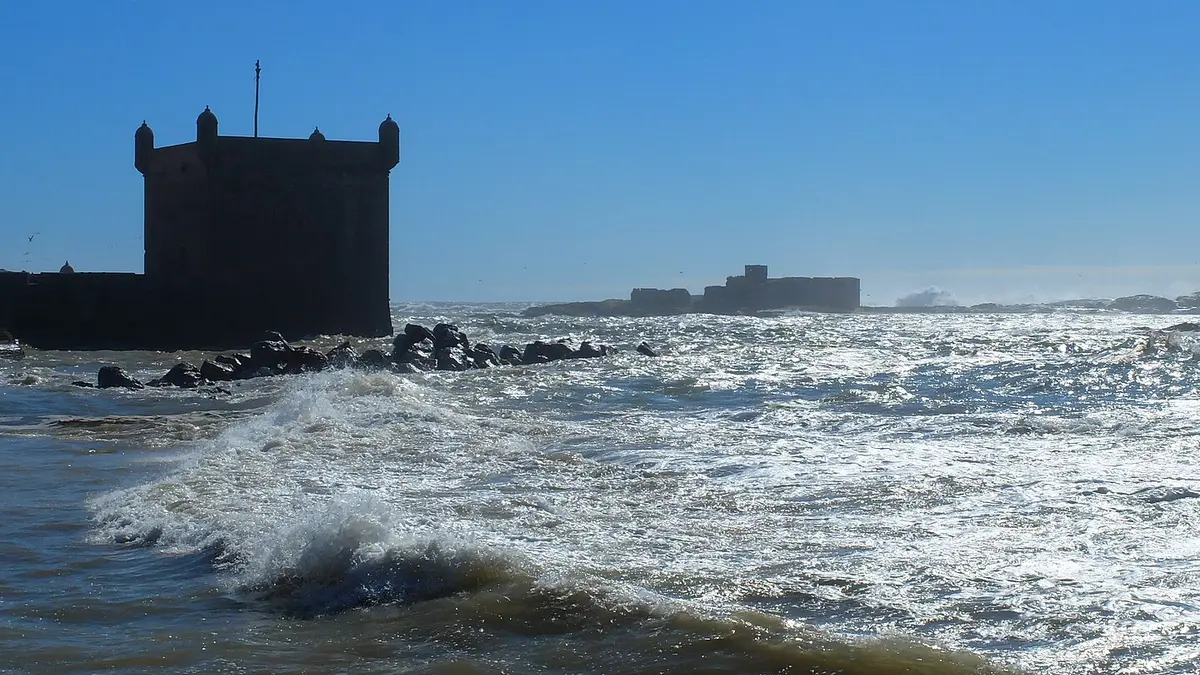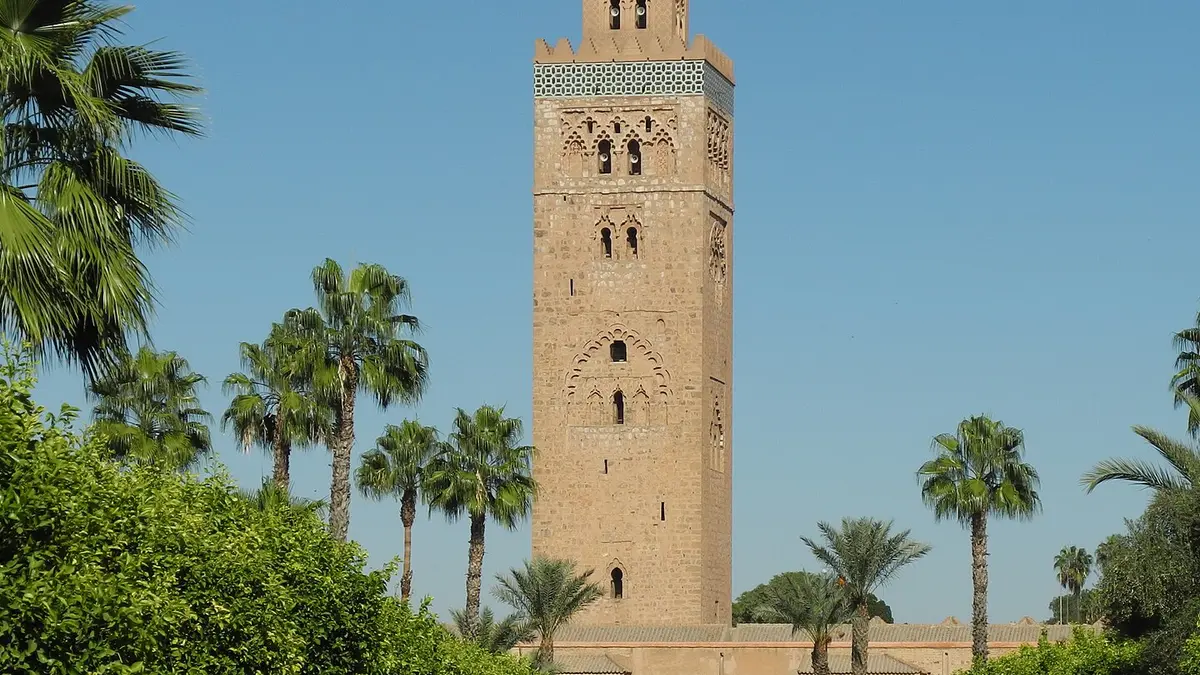
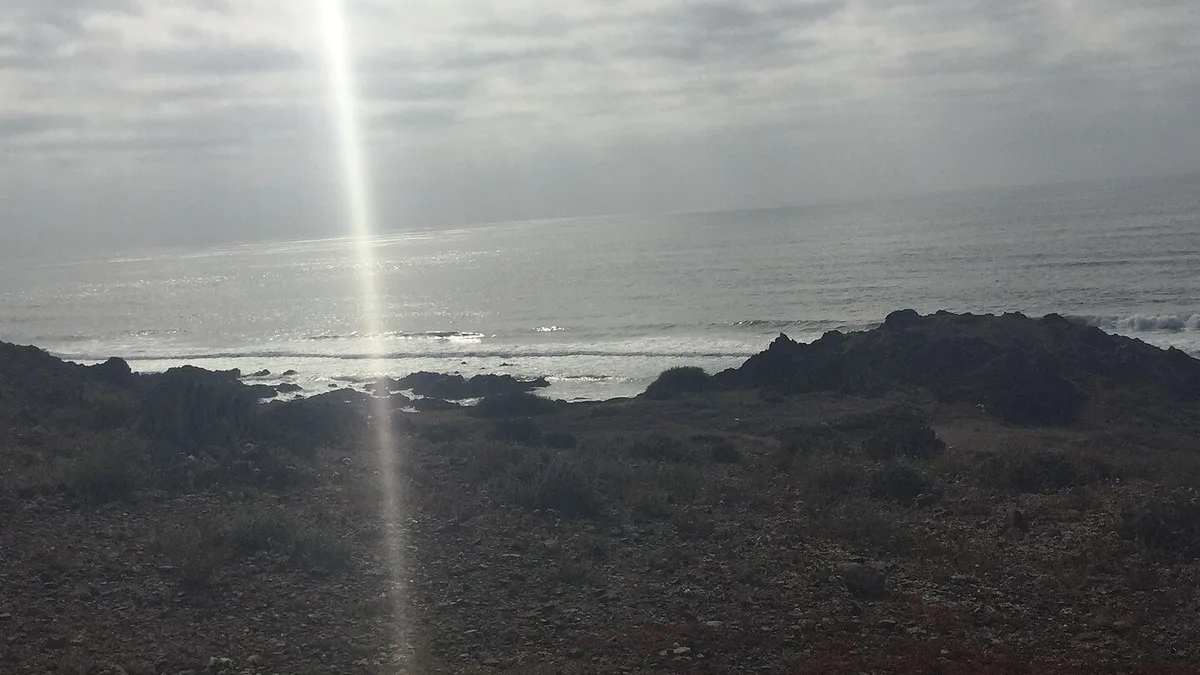
Tiznit is 91 kilometres from Agadir, Mirleft 135. Ninety minutes for the first, two hours for the second. It is the southern trip that fits best into a single day: a town of ramparts and silversmiths in the morning, cliff coves in the afternoon, and home before dark without rushing.
It also has the advantage of being flexible. If you are short of time, Tiznit alone makes a good half day. If you have time, the road carries on to Legzira and Sidi Ifni, thirty kilometres further on.
The road to Tiznit
You head south on the N1. The first twenty kilometres, between Agadir, Inezgane and Aït Melloul, are the slowest: continuous built up area, lights, scooters, lorries. Past Aït Melloul the road opens out and crosses the Souss plain and then the argan belt.
The surface is wide and in good condition, with overtaking lanes. It is also one of the most heavily policed roads in the region: mobile speed traps at the end of overtaking stretches, and limits that drop sharply on the approach to villages. Do not take your cue from the pace of other vehicles.
There is a variant for the outward or the return leg: go via Aït Baha and come down to Tiznit through the interior. It is about an hour longer, it is mountain road, and it gives you a completely different landscape, the first ridges of the Anti-Atlas, hillside villages, almond trees. Keep it for days when Mirleft is not the goal.
Tiznit: the ramparts and the silver
Tiznit was founded at the end of the nineteenth century and is surrounded by about five kilometres of rammed earth wall pierced by several gates. You can drive round it, and that is a good way to get your bearings before going in.
The centre is organised around place du Méchouar, a large square lined with cafés. Parking is easy except on market days, and everything after that is done on foot.
What sets Tiznit apart is its jewellers' souk. The town is the Moroccan centre of Berber silverwork: fibulae, bracelets, necklaces, ceremonial daggers. The workshops work in full view in the lanes of the souk. A few pointers before buying:
- Solid silver carries a hallmark. Ask to see it and to have the piece weighed; the price is by weight plus the workmanship.
- Many items presented as antique are recent copies, well made. That is not a problem as long as the price matches.
- You bargain, but within a reasonable range. Dividing the first price by four is not the custom here.
The blue spring, in the heart of the town, is tied to the legend of Lalla Tiznit who gave the town its name. It is a place of memory rather than a spectacle: do not expect an oasis.
Down to Mirleft
After Tiznit you leave the N1 for the road down to the coast. Forty four kilometres, but an hour of driving: the road climbs, drops and twists, with narrow sections and an uneven surface.
Mirleft is a large seaside village, a main street lined with cafés and shops, and a series of beaches below, each in its own cove. The main ones:
- Aftas beach, the nearest and the widest, reached by a surfaced road. Supervised bathing in summer.
- Imin Tourga, to the north, a cove framed by cliffs with a rock arch. Access is by a short downhill track.
- Sidi Mohammed Ben Abdellah, to the south, below a white marabout set on the cliff.
The old colonial fort, up on the height, gives the overall view of the whole bay. You reach it by a short but steep series of hairpins.
What can spoil the day
- Sea fog. This coast often stays in mist until the middle of the day, even when the sun is out in Agadir. That is not a reason to cancel, it is a reason not to aim for Mirleft at ten in the morning.
- Currents. The coves at Mirleft are beautiful and sometimes treacherous. Outside the supervised areas at Aftas in summer, swimming calls for caution.
- The access tracks to the beaches. Short but sloping and stony. A small car gets down at walking pace in dry weather; after rain it is better to park at the top and walk down.
- Market day in Tiznit. The centre fills up and parking becomes difficult. Ask the day before if you want to park near the Méchouar.
On the way back
Between Tiznit and Agadir, two stops are worth a twenty minute detour. The first is the mouth of the Massa river and Souss-Massa National Park, some fifteen kilometres off the N1: flamingos, bald ibis and a lagoon at the end of the day.
The second is far more modest: the roadside stalls between Aït Melloul and Agadir, where you buy citrus from the Souss plain at a price that bears no relation to the Agadir market.
All of it is comfortable in a small car. The only case where a higher vehicle earns its keep is the descents to the coves after a spell of rain.
A day heading south is 270 kilometres there and back. Leave with a full tank from Agadir and a car that is happy on a long road: the available models are on the car rental in Agadir page, and the formalities in the complete guide to renting in Agadir.
Photo: Silentsoulyass via Wikimedia Commons, CC BY-SA 3.0.